

In March 2024, our Environmental team began a transformative project at Siebert Park in Camp Hill, Pennsylvania. In collaboration with the Borough of Camp Hill and guided by an engineering design by HRG, Inc., the initiative aimed to stabilize stream banks, improve water flow and introduce new amenities, including a walking trail and kayak launch. With a strong focus on sustainability, the project revitalized Siebert Park, offering lasting benefits to both the local ecosystem and the community.
Restoring Blackberry Spring Run
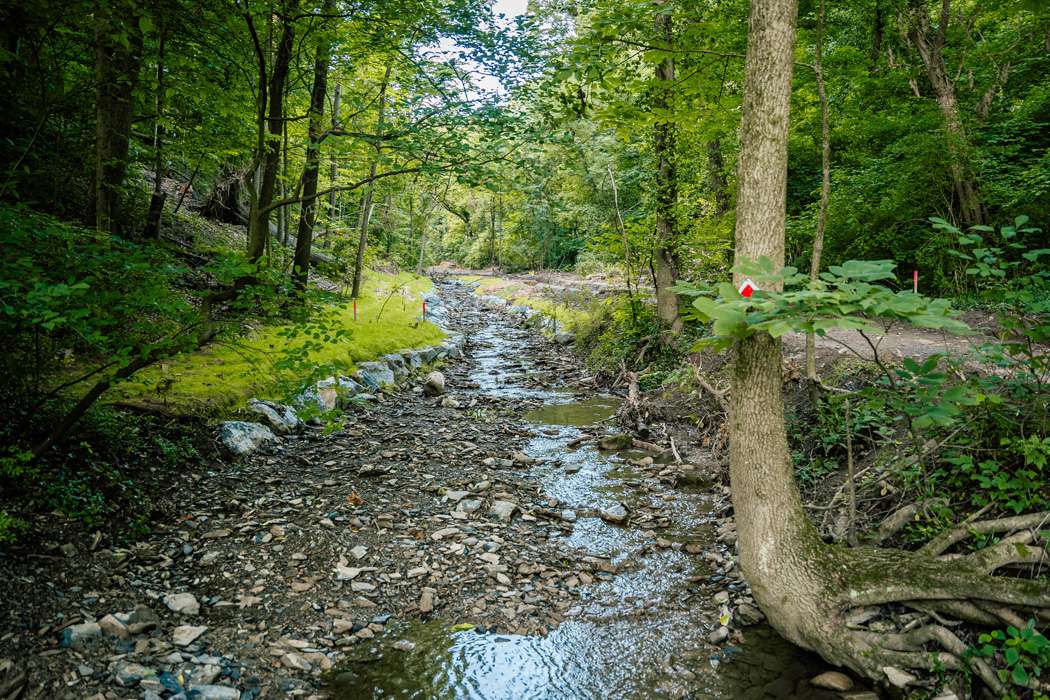
A major focus of the Siebert Park project was restoring 2,100 linear feet of Blackberry Spring Run, a vital tributary of the Conodoguinet Creek. Our team self-performed tree clearing and stream bank stabilization simultaneously, minimizing environmental disruptions by repurposing an existing stone trail as an access road.
Using GPS technology, we precisely placed stone and log structures at carefully calibrated elevations to manage water flow and prevent erosion. Restoration techniques included rock cross vanes, J-hooks, log cross vanes and bioengineering materials such as live stakes. These measures minimize bank erosion, control sediment buildup and improve water quality while creating habitats that provide safer environments for fish and other wildlife.
To protect aquatic habitats during construction, we utilized a pump bypass system to divert the stream flow around the work area. After completing the restoration, the team planted over 1,500 native trees, shrubs and live stakes to further reinforce the banks. These deep-rooted plants will stabilize the soil, prevent washouts and contribute to a thriving ecosystem for years to come.


Improving Accessibility and Recreation
One of the standout features of the project was the addition of new recreational amenities. Our Site team paved a new 2,500-foot-long ADA-compliant walking trail connecting the upper parking lot of Siebert Park to the newly constructed kayak launch along Conodoguinet Creek. This trail provides visitors with easy access to the park, encouraging them to explore its natural beauty.
To further enrich the experience, the DCNR installed educational signage along the trail, highlighting the various plant species we planted during the restoration process. The signs provide valuable information about the native trees, shrubs and vegetation chosen to stabilize the stream banks. They also educate the public on the significance of stream restoration techniques and the critical role healthy riparian zones play in preserving clean water and supporting local wildlife habitats.


A Bright Future Ahead
With the ribbon-cutting ceremony held in September 2024 and the final touches completed in November, Siebert Park is now open for all to enjoy. Whether you’re kayaking on the creek, walking the new trail, or exploring the restored stream, the park offers something for everyone. We encourage you to visit Siebert Park soon and experience the transformation firsthand!