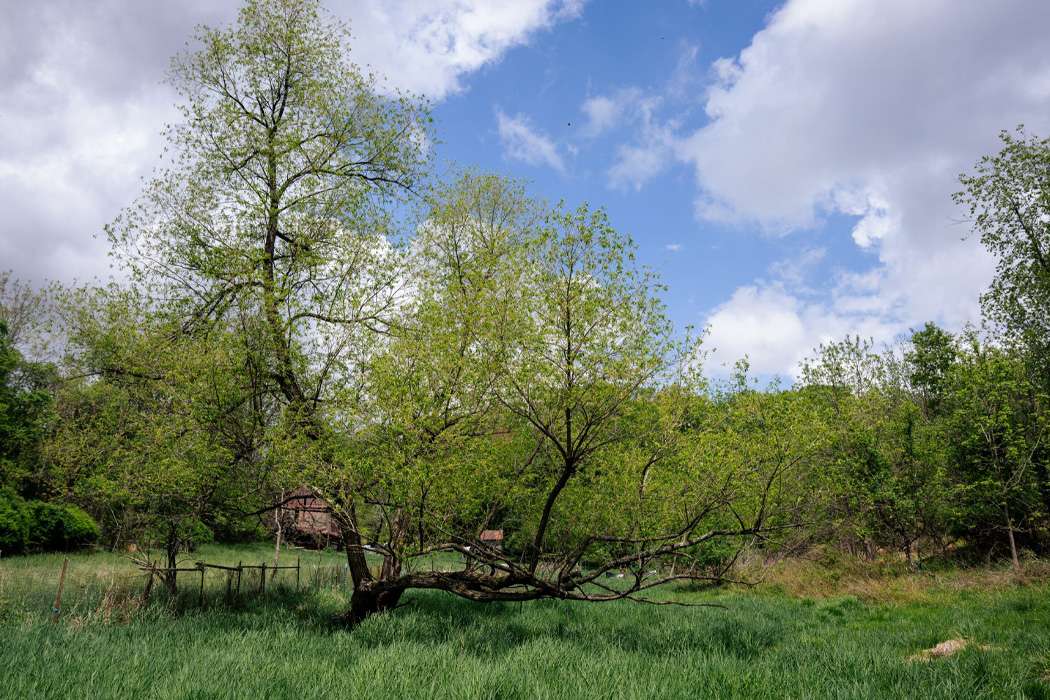
When you think of a powerful force in ecological restoration, a four-inch turtle might not be the first thing that comes to mind. But for us, North America’s smallest and most endangered turtle plays a large role in shaping how we approach wetland and stream restoration.
Our Environmental team specializes in restoring natural systems like streams, wetlands and floodplains, to improve water quality and support biodiversity. As part of that mission, we work hard to protect the species that call these places home, and in many cases, none are more important, or more sensitive, than the bog turtle.
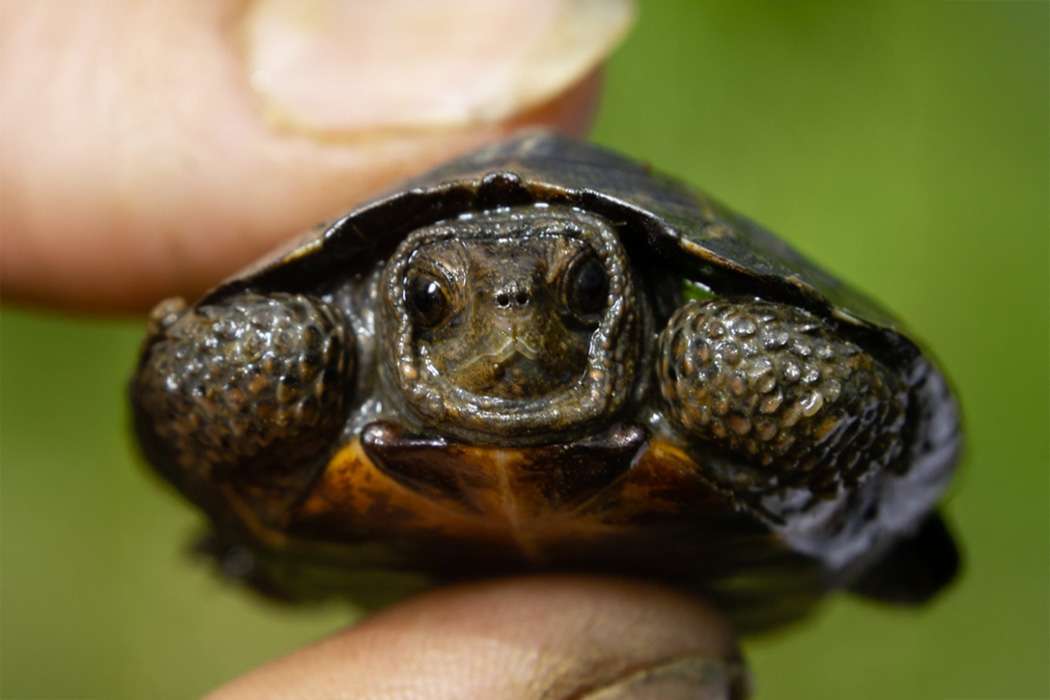
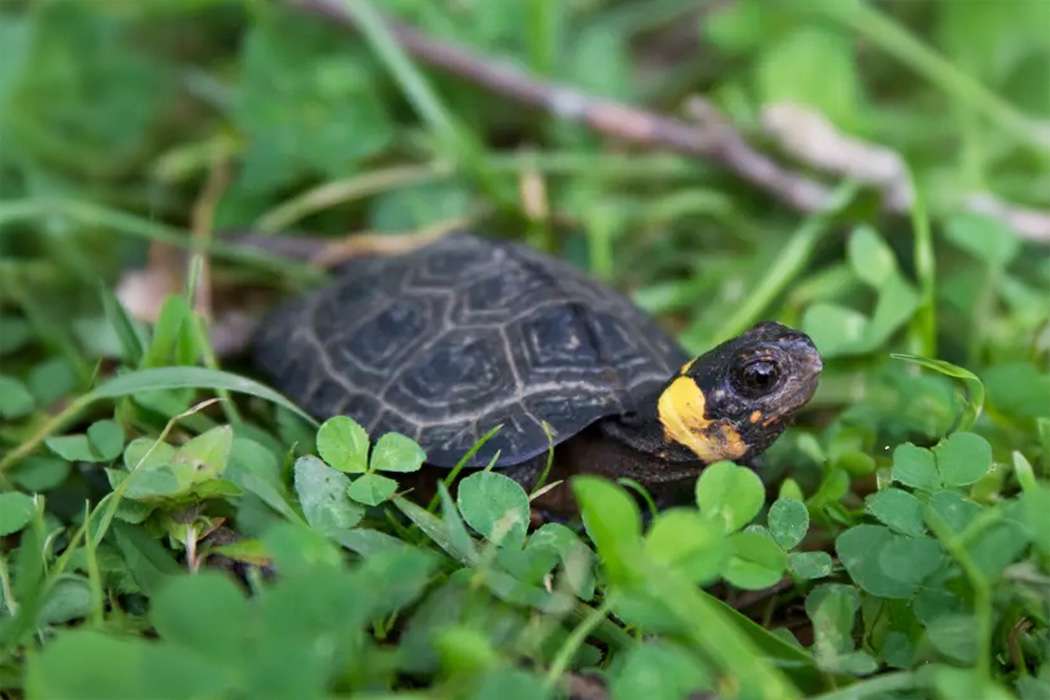
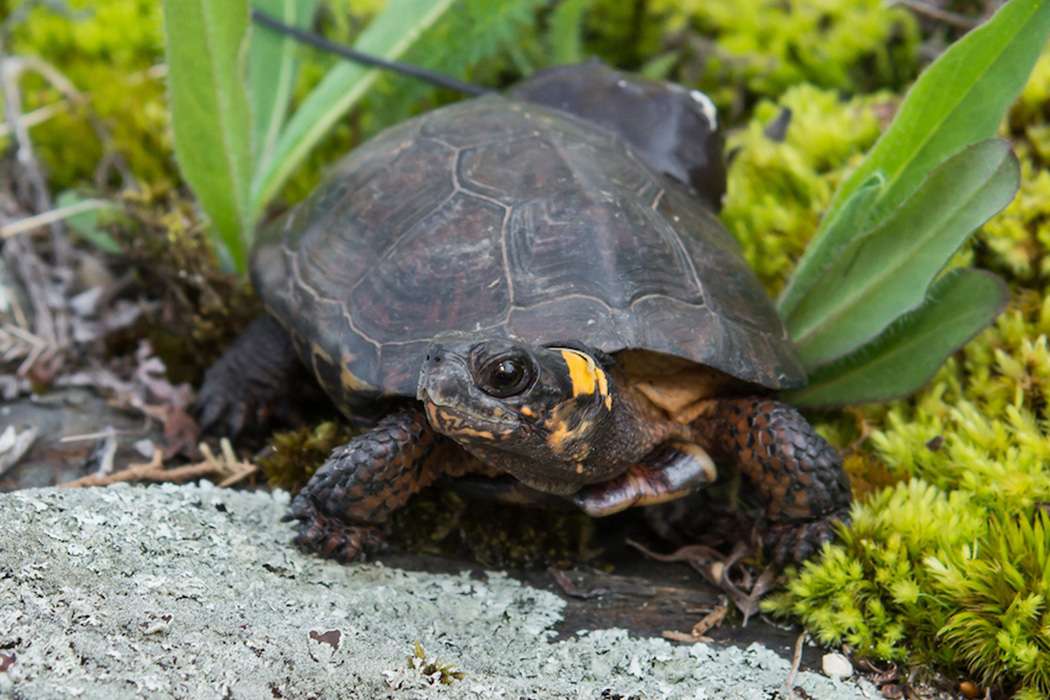
Meet the Bog Turtle
Bog turtles (Glyptemys muhlenbergii) typically weigh just four ounces and grow no longer than 4.5 inches. Despite their size, bog turtles need very specific habitats: groundwater-fed wetlands, spring seeps and wet meadows with soft, mucky soils and dense, low-growing vegetation.
Native to the eastern U.S., bog turtles are now federally listed as threatened under the Endangered Species Act, with some populations considered endangered. Their biggest threats? Habitat loss and fragmentation due to agriculture, urban development and invasive species. In many areas, their populations are so isolated that individual turtles can’t safely reach other habitats to breed or expand.
Why Bog Turtles Matter in Restoration
Bog turtles are what ecologists call indicator species. Their presence in a wetland is a strong signal that the ecosystem is functioning well, with clean groundwater, intact hydrology and native vegetation. Where bog turtles thrive, so do frogs, salamanders, migratory birds and native plants.
Their connection to hydrology is particularly important. Bog turtles rely on the stable, saturated soils found in groundwater-fed systems. So when our Environmental team restores a degraded wetland or stream, we’re reestablishing the soil, water and plant relationships that support entire ecosystems.
How Our Environmental Team Designs for Turtles
When we suspect that bog turtles may be present at a project site, our restoration process begins with careful coordination. If a site is located in a known bog turtle county and has wetland characteristics, we must complete a habitat assessment. This multi-phase process helps determine whether bog turtles are likely present and guides how we proceed.
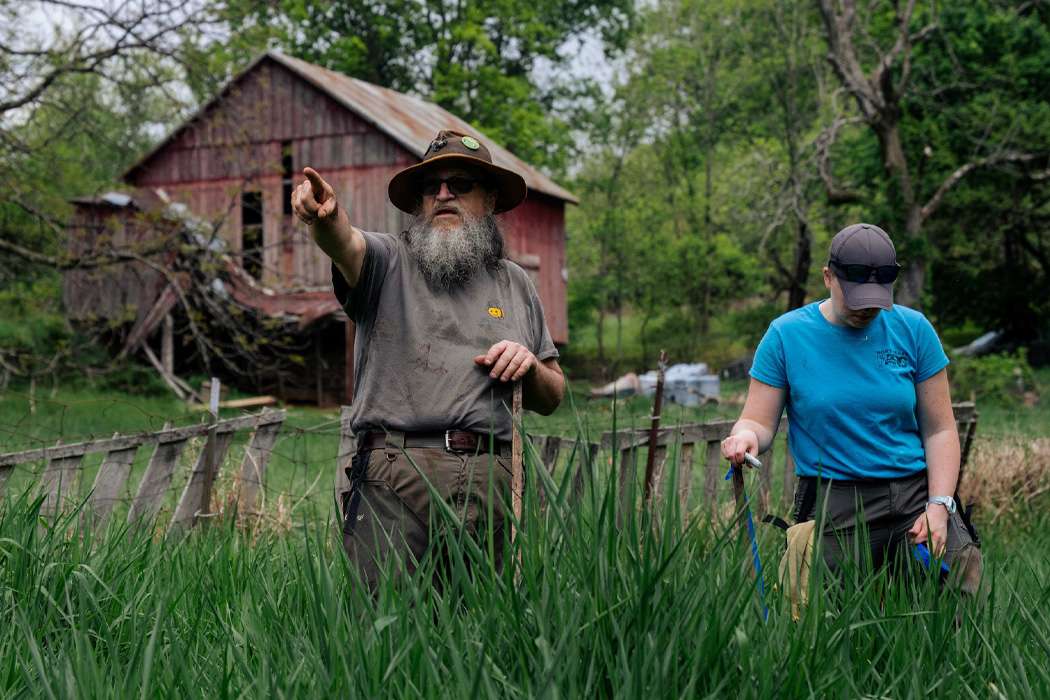
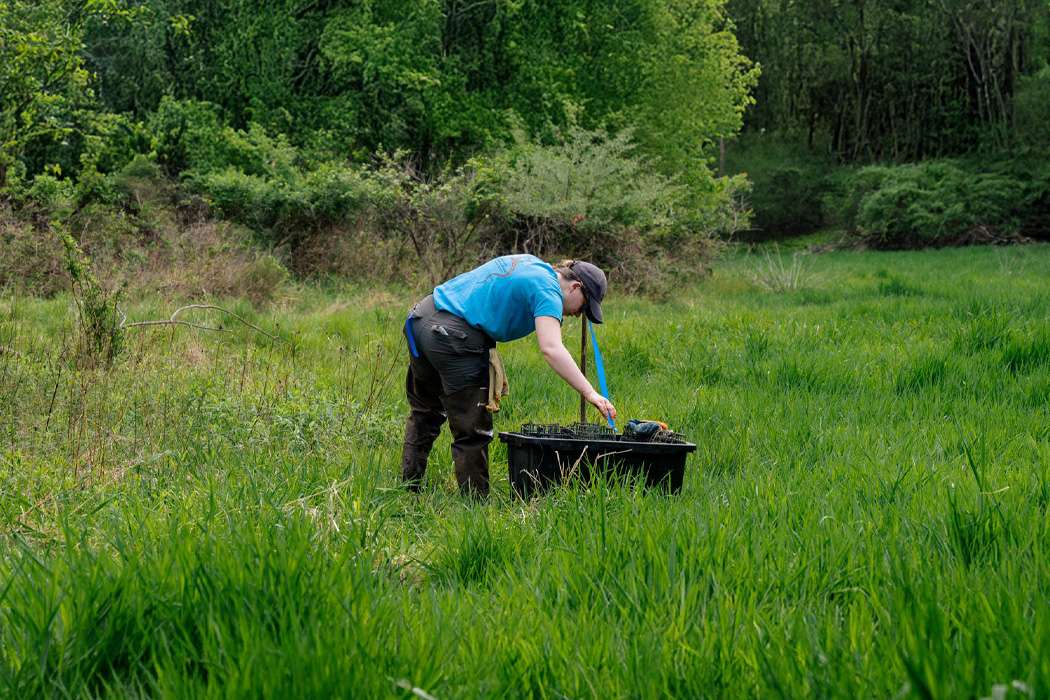
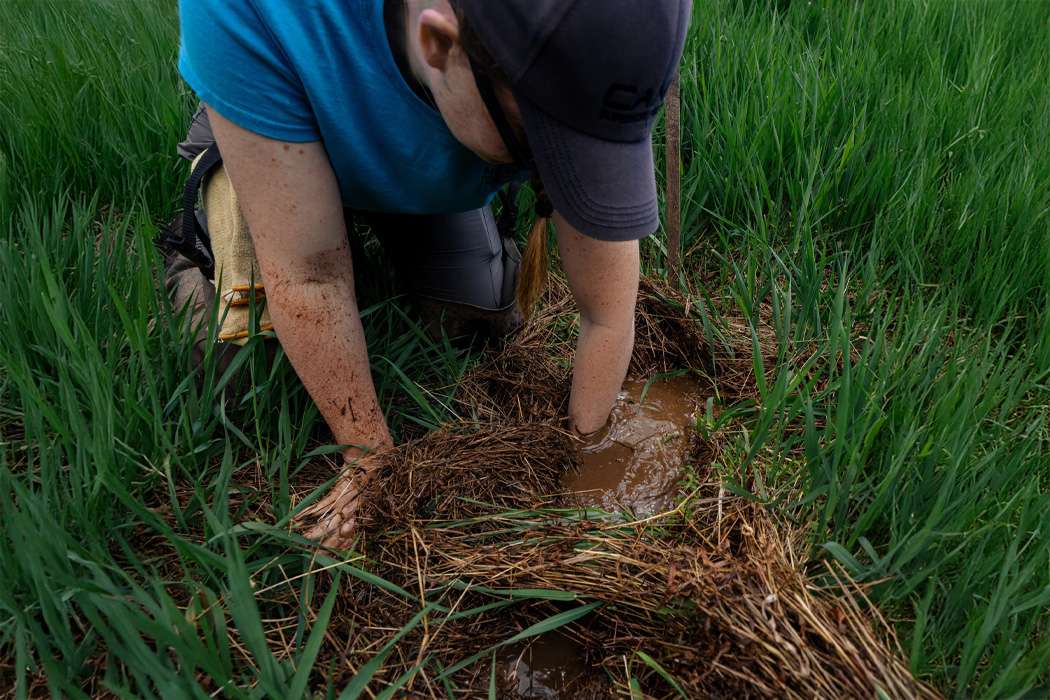
Phase 1 surveys involve evaluating whether suitable habitat exists, including measuring the depth of muck and vegetation. If the site appears suitable, Phase 2 requires a trained biologist to physically search the area for turtle presence. This involves crawling through the habitat at least four separate times for a minimum of one hour per session. This step is required in Pennsylvania to confirm presence or absence, but not in Maryland, where projects can move directly to Phase 3.
Phase 3 includes setting live-catch traps to ensure turtles are not present. If turtles are found or assumed to be present, a 300-foot buffer zone is mandated around the habitat. No construction activity can occur within this buffer, even during hibernation.
As a result, our work may involve:
- Time-of-year restrictions, limiting when we can work in sensitive areas (i.e., avoiding the March–June active season)
- Exclusion fencing to prevent turtles from entering active construction zones
- Hand-clearing vegetation instead of using machinery
- On-site biologists to monitor turtles during active work periods
- Design modifications that preserve or enhance turtle habitat, such as using native plants, minimizing soil compaction and recreating natural stream gradients
Putting Principles into Practice
We always take a habitat-first approach. That means restoring not just isolated wetlands but also the transitional corridors, like streams and low floodplains, that connect turtle populations.
In one recent project, we were called in to restore a stream and wetland system with a confirmed bog turtle habitat through the middle of the work zone. Our approach? Restore the upstream and downstream reaches but leave the middle section undisturbed to avoid fragmenting the habitat. The result was improved hydrology and better connectivity, allowing turtles and other wildlife to move freely through the landscape.
Challenges and Opportunities
Working in bog turtle territory requires flexibility, patience and close collaboration. Construction schedules often need to adapt to seasonal work windows. Restoration plans may shift based on field conditions or new discoveries. But the payoff is well worth it: vibrant, functioning wetlands and stronger wildlife populations.
Long-term success also depends on partnerships with agencies, conservation groups and landowners to maintain habitat and monitor populations over time.
Small but Mighty
Bog turtles may be small, but they’re ecological gatekeepers. Their survival depends on the health of our wetland ecosystems—and in turn, their presence helps ensure these systems are thriving.
We believe that biodiversity and restoration go hand in hand. By designing projects that support endangered species like the bog turtle, we build better, more resilient landscapes for future generations.